
What It Really Takes to Build an AI Tools Comparison API
.png)
Building an AI Tools Comparison API is more than connecting a database to an AI model. Explore the backend architecture, data validation, normalization, API testing, debugging, and reliable AI generated comparisons behind the process.
.png)
Comparing AI tools sounds easy.
A user selects a few tools — perhaps ChatGPT, Claude, and Gemini — clicks Compare, and expects a single response showing their pricing, features, ratings, advantages, disadvantages, and an overall recommendation.
The request itself might look like this:
{
"tools": ["chatgpt", "claude", "gemini"]
}
Three names go in. One comparison comes back.
But behind that simple request is an entire chain of backend operations, from validation through to the AI service and back to a structured response.
.png)
Figure 1 — The full journey of a single comparison request.
The interesting part is that the AI model is only one stage in this process. Before the model can generate a useful comparison, the system has to find the correct tools, retrieve reliable information, deal with different data sources, handle missing information, validate the request, and transform everything into a consistent structure.
That is what makes an AI Tools Comparison API more than just an AI call.
1. The Architecture Behind an AI Tools Comparison API
A reliable comparison API is not a single component; it is a chain of components working together.
Frontend The frontend allows the user to select the AI tools they want to compare and sends their selections to the backend. The frontend does not need to know where the information comes from. Its main responsibility is to send a valid request and display the comparison returned by the API.
REST API The comparison feature exposes a single endpoint:
POST /ai-tools-compare
The endpoint provides a consistent contract regardless of which AI tools the user requests.
Backend The backend receives the request and coordinates the entire comparison process. It validates the input, finds the requested tools, retrieves their information, normalizes the data, performs the comparison, and prepares the final response.
Database The database provides the information required for the comparison. In this implementation, the system works with different sources, including a curated products catalogue and a larger scraped AI-tools table.
Data Processing Different sources do not necessarily store information in the same format. Data processing therefore converts the retrieved records into a common structure before comparison takes place.
AI Service The AI service can then generate parts of the comparison such as summaries, pros and cons, recommendations, and the winner based on the structured information supplied by the backend.
Final Response The frontend receives one structured JSON response containing the comparison data.
The important point is that every layer has a job. If one layer produces unreliable data, the problem can affect everything that follows.
2. Following One Comparison Request
Consider a request to compare three tools:
{
"tools": ["chatgpt", "claude", "gemini"]
}
The backend does not immediately send these names to an AI model. Instead, the request moves through several stages:
.png)
Figure 2 — Stages a single request passes through before a response is returned.
Validation comes first. The API checks whether the request is valid. For example, it can ensure that:
at least two tools have been requested;
the tool names are valid strings;
blank values are rejected;
duplicate tools are not submitted.
This prevents invalid input from travelling further into the system.
A 400 Bad Request therefore means the request itself is not valid. A 404 Not Found means the requested tool could not be found. A 500 Internal Server Error indicates that something unexpected went wrong on the backend.
This distinction becomes extremely useful when testing and debugging the API.
3. Finding the Correct AI Tool Is Harder Than It Looks
One of the most important lessons from the comparison API was that finding a database row is not always the same as finding the correct tool.
For example, a request for:
chatgpt
can return a 404 even when ChatGPT exists in the database. Why? Because the stored slug may contain an unexpected space or use a slightly different format.
A similar problem can occur with tools whose database slugs contain additional descriptive text. For example:
Requested: midjourney
Stored: midjourney-ai-art-generation
A strict exact match will not find the stored record.
There is another problem with overly broad matching. Suppose the system searches using:
LIKE '%claude%'
That can potentially return an unrelated tool simply because the word appears somewhere in its name. The result is even worse than a 404. A 404 tells the user that something was not found. A wrong result tells the user that the system found something — when it actually found the wrong thing.
This led to an important principle:
A successful database query does not necessarily mean that valid application data has been found.
The lookup process therefore needs to consider exact matches, normalized values, valid records, and appropriate fallback strategies rather than relying on one loose database condition.
4. Working With Different AI Tool Data Sources
An AI comparison system may not always have every tool stored in one perfectly consistent table. The comparison API works with different sources.
A curated product source may contain information such as:
Name
Pricing
Category
Platform
Description
Rating
While a scraped AI-tools source may contain:
Name
Developer
Website
Logo
Tool ID
Rating
If these records are passed directly into the comparison engine, the response can become inconsistent. One tool may have detailed information while another may contain only a name and website.
That is where data normalization becomes important.
5. Data Normalization: One Shape for Every Tool
Instead of allowing every data source to have its own structure, the backend converts each tool into a common representation.
.png)
Figure 3 — Every source is converted into one standard tool object.
The normalized object can contain common fields such as:
id
slug
name
logo
website
developer
category
overview
pricing
features
ratings
platforms
The source can be different, but the structure used by the comparison engine remains consistent. This means the comparison logic does not need to ask: “Did this tool come from the products table or the scraped table?” It can simply work with the standard tool structure.
This also makes the system easier to extend. If another data source is introduced later, that source can be normalized into the same structure rather than forcing the comparison engine to understand another format.
6. What Happens When a Tool Is Not in the Database?
A comparison feature becomes limited if it can only compare tools that have already been manually added to the database. Imagine a user searches for a real AI tool that has never been stored. The normal database lookup returns nothing.
Instead of immediately returning:
404 Tool Not Found
the system can use a live lookup as a fallback when the live-search service is configured and available.
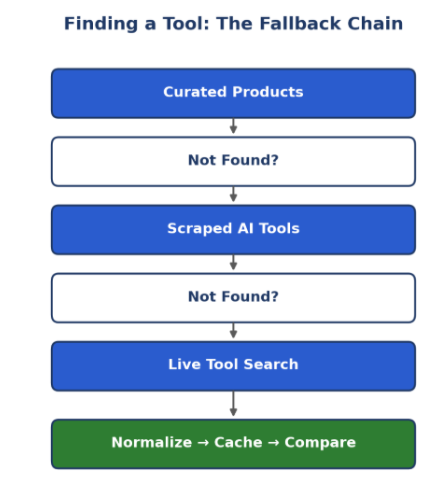
Figure 4 — The fallback chain used to locate a tool.
The live result can then be cached so that the same tool does not need to be searched again unnecessarily.
This creates a useful balance:
the database provides fast, existing information;
the scraped source provides a broader collection;
the live fallback can help discover tools that are not yet stored.
However, the fallback must still be careful. If a tool cannot be confidently identified, returning an honest not-found result is better than returning an invented one.
7. Testing the API Before the Frontend
Testing the comparison endpoint independently is extremely useful. Instead of relying only on the frontend, a request can be sent directly to the API:
{
"tools": ["chatgpt", "claude"]
}
The developer can then inspect the actual JSON returned by the backend. This makes it much easier to determine whether a problem is coming from:
the frontend;
the API request;
validation;
database lookup;
data transformation;
comparison logic;
AI generation.
Here is the actual response body returned by the /ai-tools-compare endpoint when comparing ChatGPT and Gemini through Swagger:
.png)
Figure 2b — Live response from /ai-tools-compare: status 200, normalized tool data, ratings, and pricing.
.png)
Figure 2c — The same response continued: best-use cases, per-tool recommendations, and the computed winner.
The HTTP status codes also provide immediate clues:
Status
Meaning
200
Comparison successfully generated
400
Invalid request
404
Requested tool could not be found
500
Backend / server error
Testing the API directly removes unnecessary layers and makes the actual backend behaviour easier to see.
8. Debugging the Comparison Pipeline
When something goes wrong, the most useful question is not always: “What code is broken?”
A better question is: “At which stage did the expected result change?”
The request can be traced through:
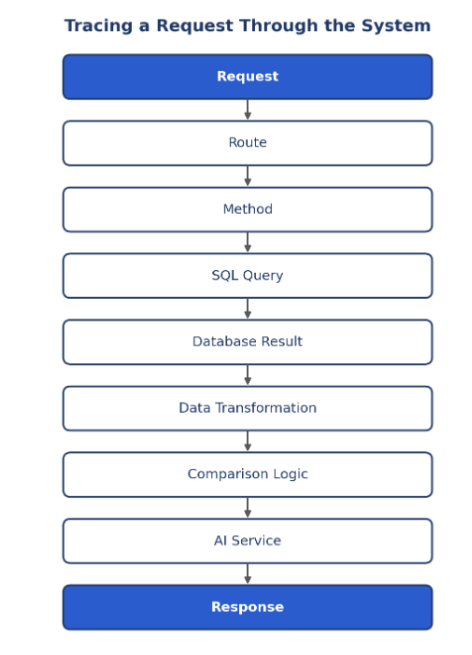
Figure 5 — Tracing a request stage by stage to isolate a failure.
For example, a 404 for a real tool does not necessarily mean the database is missing the tool. The database might return zero rows because the lookup condition is wrong. Or the tool might exist in another table. Or the live fallback might not be reached. Or the live service might require an environment variable that has not been configured.
Tracing the pipeline stage by stage makes these possibilities much easier to distinguish.
9. Small Backend Bugs Can Have Large Effects
One of the most useful debugging lessons came from a database query where the number of placeholders did not match the number of values supplied to it. The SQL query contained ten ? placeholders, while the parameters array contained only nine values. That small mismatch resulted in a database syntax error.
The important lesson is not simply to count placeholders. It is that a problem that appears at the API level can actually originate several layers below it.
A response such as:
500 Internal Server Error
does not tell the whole story. The real failure might be:
API
↓
Backend
↓
SQL
↓
Parameter mismatch
↓
MySQL error
This is why systematic tracing is more effective than guessing.
10. Making AI-Generated Comparisons Reliable
After all of the data has been retrieved and normalized, the AI service can finally be used. This is where the system can generate:
comparison summaries;
pros and cons;
recommendations;
best-use cases;
an overall winner.
But there is an important rule: the AI should describe the data it has been given, not invent information that the backend does not have.
Suppose the database does not contain verified pricing information for a particular tool. The system should not encourage the model to guess. Instead, the comparison should communicate that the information is unavailable. The same principle applies to:
ratings;
features;
integrations;
supported models;
platforms;
pricing;
company information.
This is especially important for comparison systems because users may interpret a confident statement as a verified fact. A useful AI comparison therefore depends on the quality of the information supplied to the model.
.png)
Figure 6 — Reliable backend data leads to trustworthy comparisons; poor data does not.
The AI model is not a replacement for reliable backend engineering. It is one component inside the system.
11. What Building the Comparison API Actually Teaches
Building an AI Tools Comparison API brings together several areas of software development.
APIs — The API provides a predictable way for the frontend to request comparisons.
Backend Architecture — The backend separates validation, lookup, normalization, comparison, and AI generation into understandable stages.
Databases — The system must deal with real-world issues such as inconsistent slugs, missing records, inactive data, and different data sources.
Data Normalization — Different sources need to be converted into a common structure before they can be compared reliably.
Validation — Invalid requests should be rejected before they reach the database or comparison engine.
Error Handling — Different failures need meaningful responses instead of one generic error.
API Testing — Testing the endpoint directly makes backend problems easier to isolate.
Debugging — Tracing the request through each stage helps identify where the expected result changed.
AI Services — AI generation becomes more reliable when the model receives structured and verified information.
Git and Collaboration — Changes to a backend feature need to remain organized, testable, and reviewable as the system evolves.
Final Thoughts
An AI Tools Comparison API may appear to be a simple feature: choose tools, click Compare, get results.
But behind that interaction is a complete software system. The backend has to find the right tool, retrieve the right information, handle different data sources, normalize inconsistent records, validate requests, manage errors, test failures, and only then provide structured information to the AI service.
The AI model may write the final comparison, but it cannot compensate for a tool that was never found, incorrect database data, inconsistent structures, or missing information.
That is the real challenge of building an AI Tools Comparison API.
Reliable AI comparisons start long before the AI generates the first sentence. They start with reliable data, thoughtful backend architecture, clear APIs, careful validation, systematic debugging, and a system that is willing to say “information is unavailable” rather than confidently make something up.
That is what turns an AI comparison from a simple model response into a reliable application.
Recommended for you
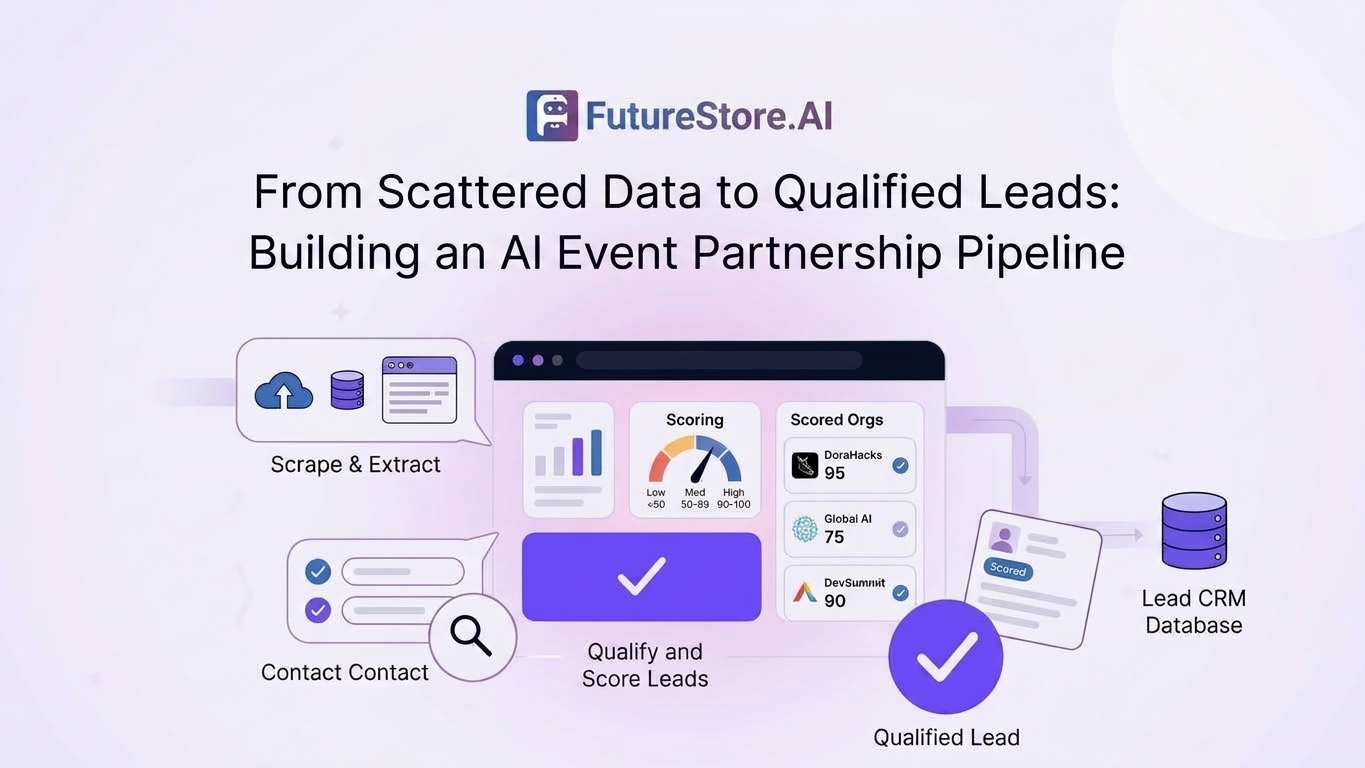
From Scattered Data to Qualified Leads: Building an AI Event Partnership Pipeline
How automated discovery, web scraping, data extraction, qualification, lead scoring, and CSV export turn scattered online information into structured partnership leads.
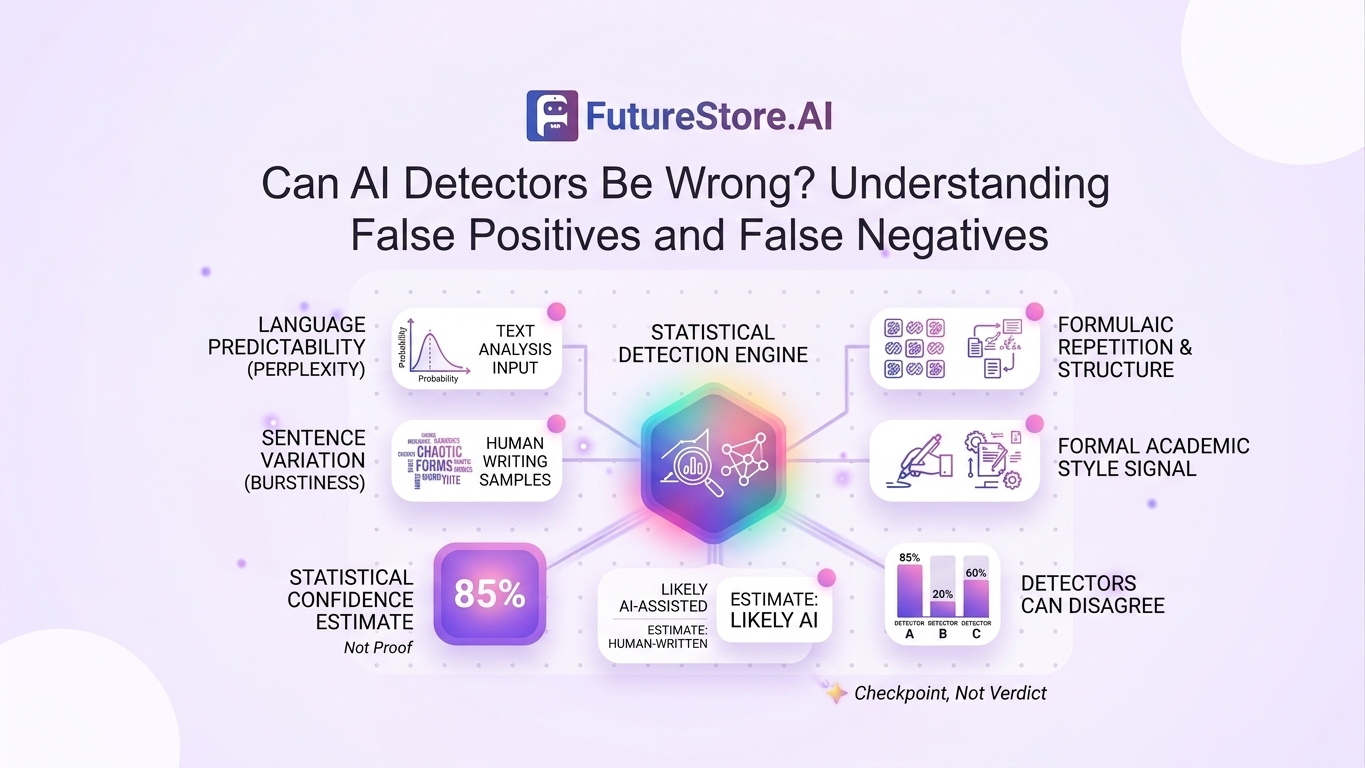
Can AI Detectors Be Wrong? Understanding False Positives and False Negatives
AI detectors can produce both false positives and false negatives. Learn how AI detection works, why results can vary, and why detection scores should be treated as indicators rather than definitive proof of authorship.
.png)
The AI Landscape in 2026: What You Need to Know
Explore the key trends shaping AI in 2026, from rapidly evolving AI models and multimodal systems to AI agents, automation, opensource AI, and the growing role of AI in everyday productivity.