
The AI Landscape in 2026: What You Need to Know
.png)
Explore the key trends shaping AI in 2026, from rapidly evolving AI models and multimodal systems to AI agents, automation, opensource AI, and the growing role of AI in everyday productivity.
AI Is Moving Faster Than Ever
Artificial Intelligence is no longer a future technology it's becoming a core part of how businesses operate, how creators work, and how people access information. In 2026, AI has evolved far beyond simple chatbots and content generators. We are now seeing intelligent systems that can understand text, images, audio, video, and even perform tasks autonomously.
For professionals, businesses, and technology enthusiasts, understanding the current AI landscape is becoming increasingly important. Here are the key trends shaping AI in 2026 and what they mean for the future.
1. The Rapid Growth of AI Models
The pace of AI development has accelerated dramatically over the past few years. New models are being released regularly by research organizations, startups, and open-source communities around the world.
Modern AI models are becoming:
Faster and more efficient
Better at reasoning and problem-solving
More specialized for specific industries
Capable of handling larger contexts and datasets
Instead of relying on a single AI system, organizations are increasingly choosing models based on their specific needs, whether that's coding, research, design, customer support, or data analysis.
This growing ecosystem is creating more choice, competition, and innovation than ever before.
2. The Rise of Multimodal AI
One of the most significant developments in AI is the rise of multimodal models.
Unlike traditional AI systems that primarily process text, multimodal AI can understand and generate content across multiple formats, including:
Text
Images
Audio
Video
Documents
For example, a user can upload a chart, ask questions about it, generate a report, and create a presentation all within the same workflow.
This shift is making AI more practical and accessible because it mirrors how humans naturally interact with information.
As multimodal capabilities improve, AI is becoming a true digital assistant rather than just a text-based tool.
Modern multimodal systems can work across multiple information types. Google’s Gemini documentation provides one example of a model designed around multimodal capabilities.Introducing Gemini: Google’s most capable AI model yet
3. Open-Source vs Proprietary AI
The debate between open-source and proprietary AI continues to shape the industry.
Open-Source AI
Open-source models provide:
Greater transparency
Customization opportunities
Lower costs
Community-driven innovation
Developers and businesses can adapt these models to specific use cases without being locked into a single provider.
Developers can explore a broad range of open and openly available models through platforms such as Hugging Face : Models – Hugging Face
Proprietary AI
Commercial AI providers often offer:
Stronger infrastructure
Enhanced security
Enterprise support
Reliable performance
Many organizations choose proprietary solutions because they require less technical expertise and provide easier deployment.
The future will likely involve a combination of both approaches, with businesses selecting the right balance of flexibility, performance, and cost.
4. AI Agents and Automation
Perhaps the most exciting trend in 2026 is the emergence of AI agents.
Traditional AI tools respond to prompts. AI agents go a step further by performing tasks autonomously.
Examples include:
Researching information
Scheduling meetings
Managing workflows
Monitoring data
Generating reports
Executing multi-step processes
When combined with automation platforms, AI agents can significantly reduce repetitive work and improve productivity.
Businesses are increasingly exploring agent-based workflows to streamline operations and allow employees to focus on higher-value activities.
5. AI Is Becoming an Everyday Productivity Layer
AI is no longer a standalone technology.
It is becoming integrated into:
Search engines
Design software
Productivity tools
CRM platforms
Development environments
Communication platforms
Instead of opening a separate AI application, users are increasingly interacting with AI directly inside the tools they already use.
This trend is making AI adoption easier and accelerating its impact across industries.
What’s Next for AI?
Looking ahead, several developments are likely to define the next phase of AI:
More Specialized Models
Organizations will increasingly adopt AI systems tailored to specific industries and workflows.
Better Reasoning Capabilities
Future models will continue improving their ability to analyze complex problems and provide reliable outputs.
Advanced AI Agents
AI agents will become more autonomous, capable of handling increasingly sophisticated tasks.
Greater Accessibility
AI tools will become easier to use, reducing technical barriers and expanding adoption.
Increased Focus on Governance
As AI becomes more powerful, organizations and governments will place greater emphasis on responsible deployment, transparency, and compliance.
Final Thoughts
The AI landscape in 2026 is defined by rapid innovation, multimodal capabilities, growing model diversity, and the rise of autonomous AI agents.
For businesses and professionals, staying informed about these trends is no longer optional it is becoming a competitive necessity.
As AI continues to evolve, those who understand the technology and adapt their workflows accordingly will be best positioned to take advantage of the opportunities ahead.
The future of AI is not just about smarter tools. It is about creating intelligent systems that enhance human creativity, productivity, and decision-making at scale.
Explore the Future of AI
Discover AI tools, emerging technologies, industry insights, and the latest innovations shaping the future at FutureStoreAI.
FutureStore AI – Discover & Use Powerful AI Tools
Recommended for you
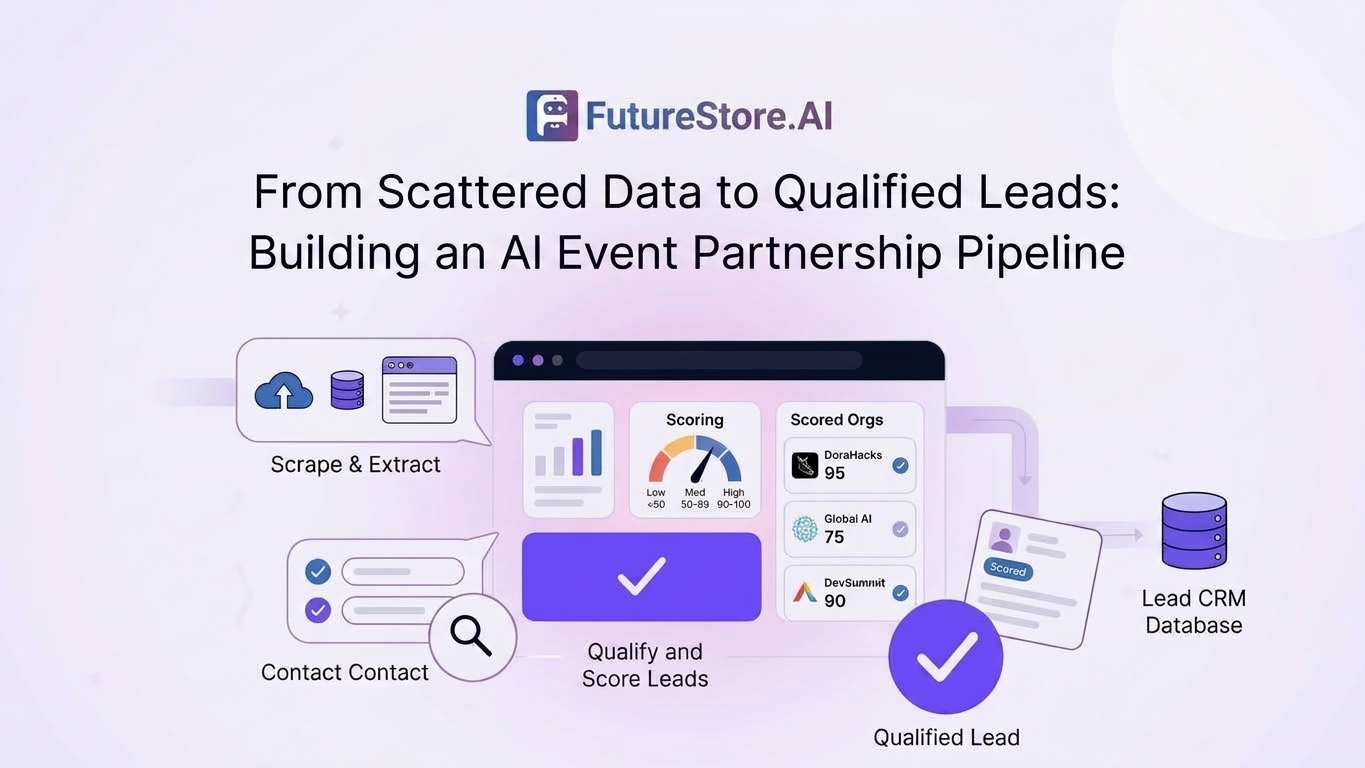
From Scattered Data to Qualified Leads: Building an AI Event Partnership Pipeline
How automated discovery, web scraping, data extraction, qualification, lead scoring, and CSV export turn scattered online information into structured partnership leads.
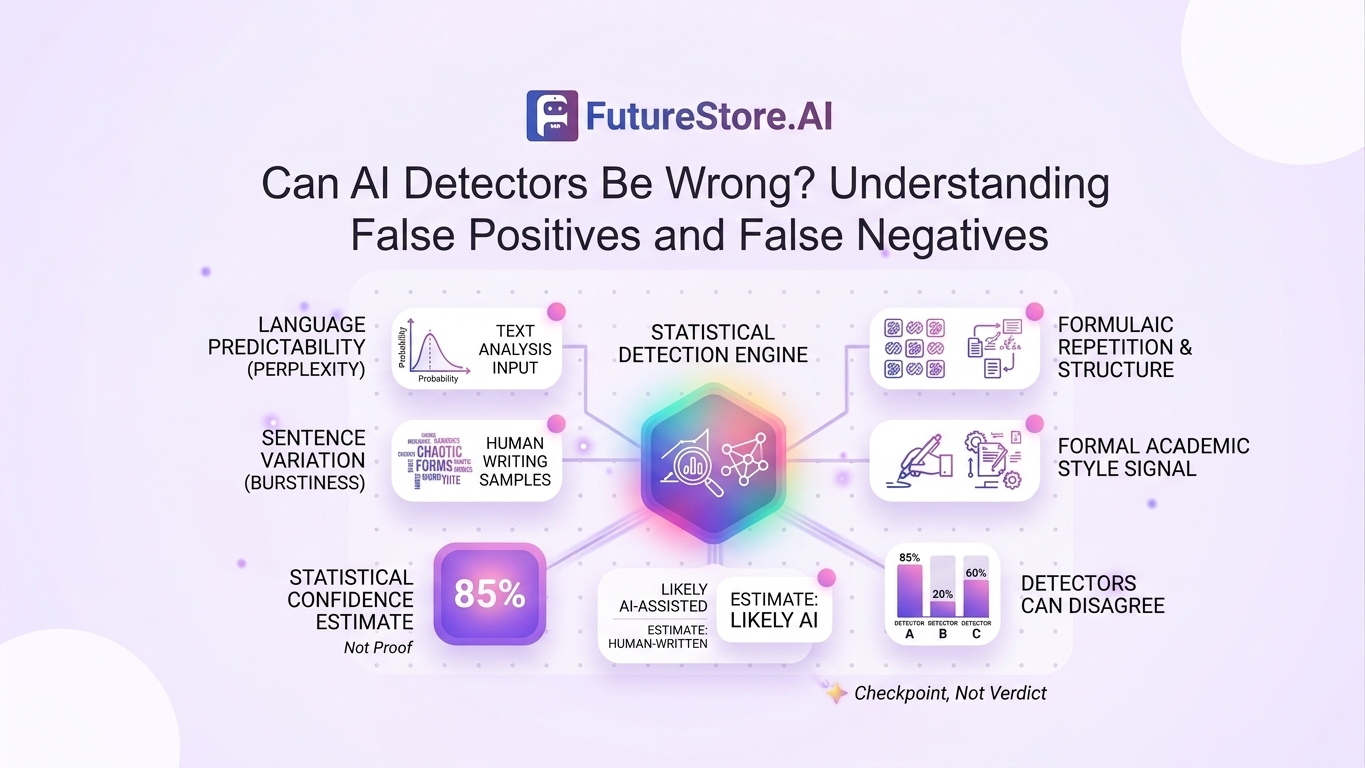
Can AI Detectors Be Wrong? Understanding False Positives and False Negatives
AI detectors can produce both false positives and false negatives. Learn how AI detection works, why results can vary, and why detection scores should be treated as indicators rather than definitive proof of authorship.
.png)
What Is AI Live? A New Way to Experience Real-Time AI
Discover AI Live, FutureStoreAI’s real-time AI experience designed to make AI discovery more interactive through live demonstrations, learning, discussions, trends, and community engagement.