
How AI Model Routing Works: Choosing the Right Model for Every Task
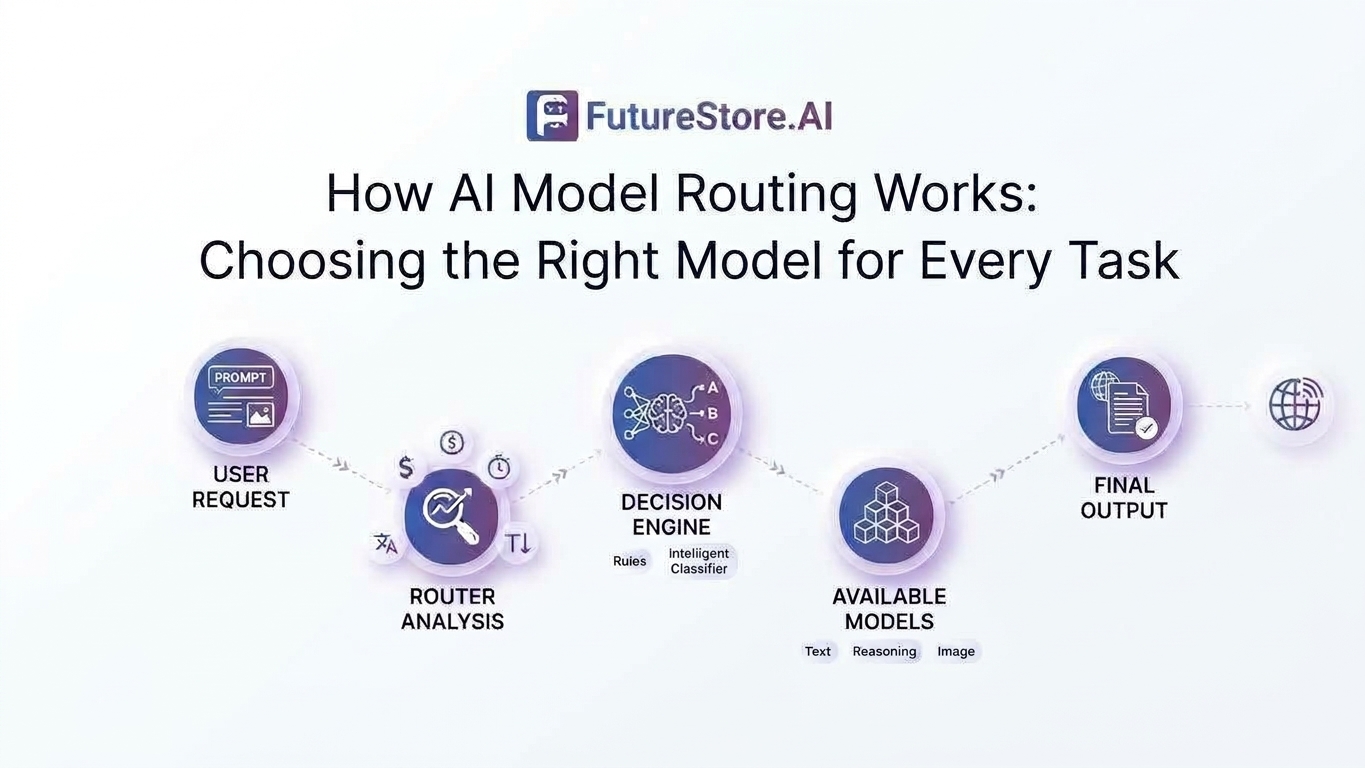
AI model routing helps applications select the right AI model for each request based on task requirements, capabilities, speed, cost, and reliability. Learn how routing works and why it matters for modern AI platforms.
As AI applications become more capable, they are also becoming more dependent on multiple models. A single application might use one model for general conversations, another for image generation, another for speech, and a more powerful model for complex reasoning. As the number of AI models and tools continues to grow, platforms such as FutureStoreAI bring together different AI tools and capabilities for users to explore.
But this growing number of models also raises an important engineering question: how does an application decide which model should handle a particular request?
This is where AI model routing comes in.
What Is AI Model Routing?
AI model routing is the process of selecting an appropriate AI model for a specific request.
Instead of sending every request to the same model, an application can evaluate what the user is asking for and choose a model based on the requirements of that task. A simple text request, a long document analysis, and an image-generation request may all require different models.
The user does not necessarily need to know which model is running behind the scenes. The application can make that decision in the background based on factors such as the type of task, input size, required capabilities, speed, and cost.
Why Do Applications Need Multiple Models?
There is no single AI model that is ideal for every situation.
AI models differ significantly in their capabilities, speed, context limits, cost, and supported input types. Some are engineered to be fast and inexpensive, while others are built for highly demanding workloads.
Using the same expensive model for every request can also be inefficient. A simple task such as rewriting a sentence may not require the same resources as analyzing a large document or solving a complex reasoning problem.
A multi-model application can therefore assign different workloads to models that are better suited to them. This gives developers more flexibility while helping them balance quality, performance, and cost.
What Does a Router Look At?
A router needs information about both the request and the available models to make a useful decision. Several factors can influence which model is selected:
Type of Task: Is the user asking for text generation, image creation, summarization, translation, coding, or something else?
Input Size: A long document requires a model with a larger context window than a short, one-sentence question.
Speed: If a request is simple and needs a quick response, a smaller and faster model may be more suitable.
Cost: If multiple models can handle a task, the application may choose a less expensive option when it can meet the required quality.
Multimodal Input: A request containing an image, audio recording, or video requires a model that supports the relevant type of input.
These factors do not always work independently. A router may consider several of them together before selecting a model.
How Does the Routing Process Work?
Think of routing as a decision the application makes before the AI generates a response.
When a request reaches the application, the system first determines what the request requires. It then compares those requirements with the capabilities of the available models.
For example, suppose an application has three models:
Model A: Fast and inexpensive for simple text tasks
Model B: Stronger reasoning and a longer context window
Model C: Designed for image generation
If a user asks for a short email, the application may use Model A. If the user provides a long document for detailed analysis, Model B may be selected. If the request is to create an image, Model C may be selected.
The important part is that model selection happens as part of the application logic rather than being left entirely to the user.
Rule-Based Routing
One way to implement routing is with predefined rules.
For example, developers can define conditions such as:
Image request → image model
Audio request → speech model
Simple text request → fast language model
Long-context request → long-context model
This approach is relatively straightforward and predictable. It can work well when the application has a limited number of models and clearly defined use cases.
The limitation is that user requests are not always easy to categorize. A request can contain multiple requirements, and fixed rules can become difficult to maintain as the system grows.
Intelligent Routing
As applications become more complex, routing can use more advanced strategies.
Instead of looking only at the type of request, the router can consider several factors together. It might look at the complexity of the task, the amount of input, required response quality, current model availability, expected latency, and cost.
Some systems can also use a smaller model or classifier to determine which model should handle the request.
This creates another layer of decision-making around the AI models themselves. The system is not only asking, “What should the AI answer?” but also “Which AI model should handle it?”
This becomes particularly useful when an application has access to several models with different strengths. The routing layer can select a model that fits the requirements of each request rather than treating every model as interchangeable.
What Happens When a Model Fails?
Model selection is only one part of routing. Reliability is another important consideration.
An AI provider can experience rate limits, temporary failures, high latency, or service interruptions. If an application depends entirely on one model, these problems can directly affect the user experience.
A routing system can provide fallback options.
For example, if the preferred model is temporarily unavailable, the application can select another compatible model rather than immediately returning an error.
The fallback does not necessarily have to produce exactly the same result. The goal is to keep the application working while still respecting the requirements of the request.
A Simple Real-World Example
Imagine an AI platform where a user uploads an image and asks:
“Describe this image and then create a new version in a different style.”
This request involves more than one capability.
The application could first send the image to a vision-capable model to understand its contents. The resulting description can then be used as input for an image-generation model.
In this situation, routing is not simply about choosing one model. It is about choosing the appropriate model at each stage of the task.
This becomes especially important as AI applications become multimodal and start combining different models within the same workflow.
Why Model Routing Matters
From a user's perspective, model routing may be almost invisible. They simply submit a request and receive a result.
For developers, however, it can make a significant operational difference.
A well-designed routing system can help an application:
Use specialized models where they are most suitable
Reduce unnecessary model usage and associated token costs
Improve overall response times
Support different types of AI workloads
Handle model failures more gracefully
Add, upgrade, or replace underlying models without rewriting the entire application logic
It also reduces the need for the rest of the application to understand the implementation details of every model it supports. The routing layer can act as an abstraction between the application and the models behind it.
How Model Routing Relates to FutureStoreAI
The idea of model routing becomes increasingly relevant as AI platforms support a wider range of models and capabilities. FutureStoreAI is one example of a platform that brings together different AI tools and capabilities for users to explore.
These tools cover different types of tasks, such as image generation, text analysis, audio processing, translation, and AI detection. Each task can have different requirements and may rely on different model capabilities.
As the number of available AI capabilities grows, selecting the appropriate model can become an important part of the underlying architecture. A routing layer can help determine which model or capability should handle a request based on factors such as the type of task, input requirements, and the capabilities available to the application.
Conclusion
The rapid evolution of the AI landscape means that applications are no longer limited to working with a single model. Developers now have access to a growing number of models, each with different strengths, limitations, costs, and supported capabilities.
Model routing provides a way to manage that growing range of choices.
The goal is not simply to use the most powerful model. It is to select a model that fits the specific task, available resources, and required level of performance.
As AI platforms continue to support more diverse workloads, routing will become an increasingly important part of modern software architecture.
The user may only see a single, simple text box, but behind that interface, there can be a quiet traffic controller deciding which model should handle each request.
Recommended for you
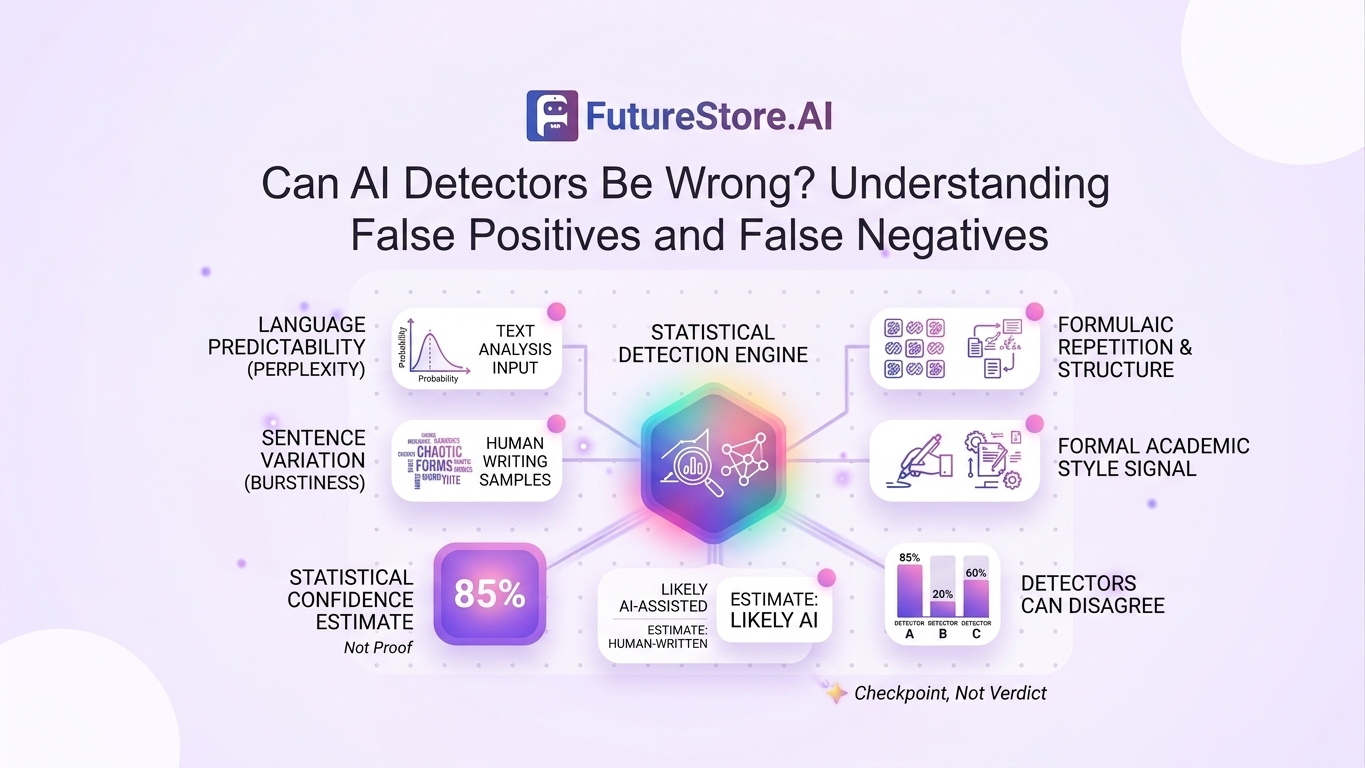
Can AI Detectors Be Wrong? Understanding False Positives and False Negatives
AI detectors can produce both false positives and false negatives. Learn how AI detection works, why results can vary, and why detection scores should be treated as indicators rather than definitive proof of authorship.
.png)
The AI Landscape in 2026: What You Need to Know
Explore the key trends shaping AI in 2026, from rapidly evolving AI models and multimodal systems to AI agents, automation, opensource AI, and the growing role of AI in everyday productivity.
.png)
AI-Powered Quality Engineering: Building the Next Generation of QA Strategy
AI is changing how software is built, tested, and released. For QA teams, the opportunity is not to replace traditional testing, but to make quality engineering smarter, faster, and more risk-focused. This article explores practical ways teams can use AI across the software testing lifecycle while keeping human judgment at the center.