
AI-Powered Quality Engineering: Building the Next Generation of QA Strategy
.png)
AI is changing how software is built, tested, and released. For QA teams, the opportunity is not to replace traditional testing, but to make quality engineering smarter, faster, and more risk-focused. This article explores practical ways teams can use AI across the software testing lifecycle while keeping human judgment at the center.
The Way We Think About QA Is Changing
Software teams are releasing faster than they were a few years ago. Features move from an idea to production quickly, APIs change frequently, and users expect everything to work across different devices and environments.
That puts QA teams in an interesting position.
Testing more is not always the answer. A team can execute thousands of automated tests and still miss an important problem if the tests are focused on the wrong areas.
This is where Quality Engineering (QE) becomes important.
Quality Engineering is not simply about finding defects before production. It is about building quality into the entire software development lifecycle.
AI adds another interesting layer to this approach.
Used properly, AI can help QA engineers understand requirements, identify risks, generate test ideas, analyze failures, and spend more time on the areas that require human thinking.
The goal is not “AI replaces QA.”
The better goal is:
QA engineers using AI to build better software.
From Traditional QA to Quality Engineering
Traditional QA has often been viewed as a final checkpoint before a release.
Developers build the feature, and QA verifies whether it works.
That approach can work for smaller products, but it becomes difficult as applications grow.
Modern Quality Engineering asks different questions:
What could go wrong with this feature?
Which users or business processes are most affected?
What should we test first?
Can we detect the problem earlier?
Which tests should be automated?
Are our APIs behaving correctly?
What happens when a dependency fails?
Can we identify production risks before release?
What can we learn from previous defects?
This changes the role of QA from “test execution” to “quality ownership.”
AI can support this transition by helping engineers process large amounts of information and identify patterns that might otherwise take significant manual effort.
Where AI Fits Into the QA Strategy
AI does not need to be added everywhere at once.
A practical QA strategy can introduce AI gradually across different stages of testing.
Requirement Analysis
Before writing a test case, QA engineers need to understand what the system is supposed to do.
AI can help analyze user stories, acceptance criteria, product requirements, and technical documentation.
For example, given a requirement for a payment feature, AI can help identify potential scenarios such as:
Successful payment
Failed payment
Duplicate payment
Invalid card details
Expired card
Network interruption
Payment timeout
Currency mismatch
Refund handling
The QA engineer still decides which scenarios are relevant. AI simply helps expand the initial thinking.
Test Case Generation
Writing test cases can become repetitive, especially for well-defined CRUD workflows.
AI can generate an initial set of positive, negative, boundary, and edge-case scenarios from a requirement.
For example, for a registration form, AI might suggest testing:
Valid registration
Missing required fields
Invalid email
Weak password
Existing email
Maximum field length
Special characters
Duplicate submission
Network failure
The important point is that generated test cases should not automatically become approved test cases.
A QA engineer needs to review them for accuracy, relevance, business rules, and missing scenarios.
AI-Powered API Testing
Modern applications depend heavily on APIs, which makes API testing a major part of Quality Engineering.
AI can assist with API testing by analyzing API specifications, request and response structures, authentication requirements, status codes, validation rules, error responses, and dependencies between APIs.
It can also help identify scenarios that are easy to overlook.
For example, a QA engineer testing a user API should not only verify a successful 200 response. The test strategy should also consider:
400 Bad Request
401 Unauthorized
403 Forbidden
404 Not Found
409 Conflict
429 Too Many Requests
500 Internal Server Error
AI can help generate these scenarios, but the QA engineer needs to verify whether the expected behavior actually matches the product requirements.
Smarter Regression Testing
Regression testing becomes challenging when an application has hundreds or thousands of existing test cases.
Running everything after every small change may not always be practical.
AI can potentially help teams identify which tests are more relevant based on changed code, changed modules, previous failures, user activity, defect history, dependencies, and risk level.
Imagine a developer changes the authentication module. Instead of treating every test as equally important, a smarter testing strategy could prioritize:
1. Login
2. Logout
3. Session management
4. Password reset
5. Authorization
6. Protected APIs
7. User profile access
This does not eliminate regression testing. It makes regression testing more risk-aware.
AI-Assisted Test Automation
Automation is already an important part of modern QA. AI can make automation easier to maintain, but it should be used carefully.
AI can assist with:
Generating automation code
Creating selectors
Converting manual scenarios into automation ideas
Explaining automation failures
Generating test data
Updating repetitive test logic
Identifying potential flaky tests
There is also growing interest in self-healing automation, where automation frameworks attempt to recover when UI elements change.
However, self-healing should not become an excuse to ignore application changes.
If a button changes from “Delete Account” to “Deactivate Account,” an automation framework should not blindly adapt and continue passing the test.
Sometimes a broken test is actually telling us that the product behavior changed.
AI for Defect Analysis
A good bug report is more than a screenshot and the words “not working.”
QA engineers need to provide enough information for developers to understand and reproduce the problem.
AI can help analyze error logs, console errors, API responses, stack traces, screenshots, and failed test results.
It can also help group similar failures.
For example, ten failed test cases might appear to be different problems, but they could all be caused by one authentication service issue.
AI can help identify that pattern faster.
The final decision, however, should remain with the engineering team.
AI Should Also Be Used to Test AI
If a product itself uses AI, traditional functional testing is no longer enough.
An AI-powered application may produce different results for similar inputs.
QA teams need to consider areas such as:
Accuracy
Consistency
Hallucination
Bias
Prompt injection
Data privacy
Unsafe outputs
Response quality
Latency
Model failures
Fallback behavior
For example, if an AI application translates content, QA should not only check whether the response is generated. The team should evaluate whether the translation is correct, meaningful, consistent, and appropriate for the intended context.
This is where AI testing becomes its own discipline within Quality Engineering.
Building an AI-Powered QA Strategy
Introducing AI into QA should not start with the question: “Which AI tool should we buy?” Start with the problem.
A practical approach is:
Step 1: Identify Repetitive Work
Look at tasks that consume significant QA time.
Examples include test case drafting, test data creation, log analysis, regression analysis, test documentation, and test result summaries.
Step 2: Identify High-Value Opportunities
Not every QA activity needs AI. Choose areas where AI can provide measurable improvement without compromising quality.
Step 3: Keep Human Review
AI-generated output should be treated as an assistant's suggestion, not as an authoritative answer.
QA engineers should review test cases, expected results, automation code, defect analysis, and risk assessments.
Step 4: Measure the Impact
Track whether AI is actually helping.
Useful metrics can include test creation time, automation development time, defect detection rate, regression execution time, escaped defects, false positives, and test maintenance effort.
If AI makes a process faster but introduces more false positives, the strategy needs adjustment.
The Human + AI Model
One of the biggest mistakes teams can make is treating AI as a replacement for engineering judgment.
AI is good at processing information quickly. QA engineers are responsible for understanding context.
A model might identify that a payment API returns a 200 response. A QA engineer asks: “Did the payment actually happen correctly?”
A model might generate ten test cases. A QA engineer asks: “Which of these cases actually matter to our customers and business?”
That difference is important.
The strongest QA teams will likely not be the teams with the most AI tools. They will be the teams that know when to use AI, when not to use it, and how to validate its output.
What QA Leaders Need to Prepare For
For QA leaders, AI adoption is not only a tooling decision. It is also a people and process decision.
Teams need to develop skills across test automation, API testing, data analysis, AI-assisted development, AI application testing, security awareness, CI/CD, observability, and risk-based testing.
QA engineers should become comfortable working with AI while maintaining strong fundamentals in software testing.
The future QA engineer will not just ask: “Did the feature pass?” They will ask: “How confident are we in the quality of this release, and what evidence supports that confidence?”
That is a much more valuable question.
Final Thoughts
AI is not making software testing irrelevant. It is changing what good testing looks like.
The repetitive parts of QA can increasingly be assisted by intelligent tools, giving engineers more time to focus on risk, architecture, user behavior, business impact, and quality decisions.
The transition from QA to Quality Engineering is therefore not about replacing the tester. It is about giving the tester better tools and a broader responsibility for product quality.
The next generation of QA will be a combination of engineering skills, domain knowledge, automation, data, AI, and human judgment.
And the teams that learn how to combine these effectively will have a significant advantage as software continues to become faster, more complex, and more intelligent.
Recommended for you
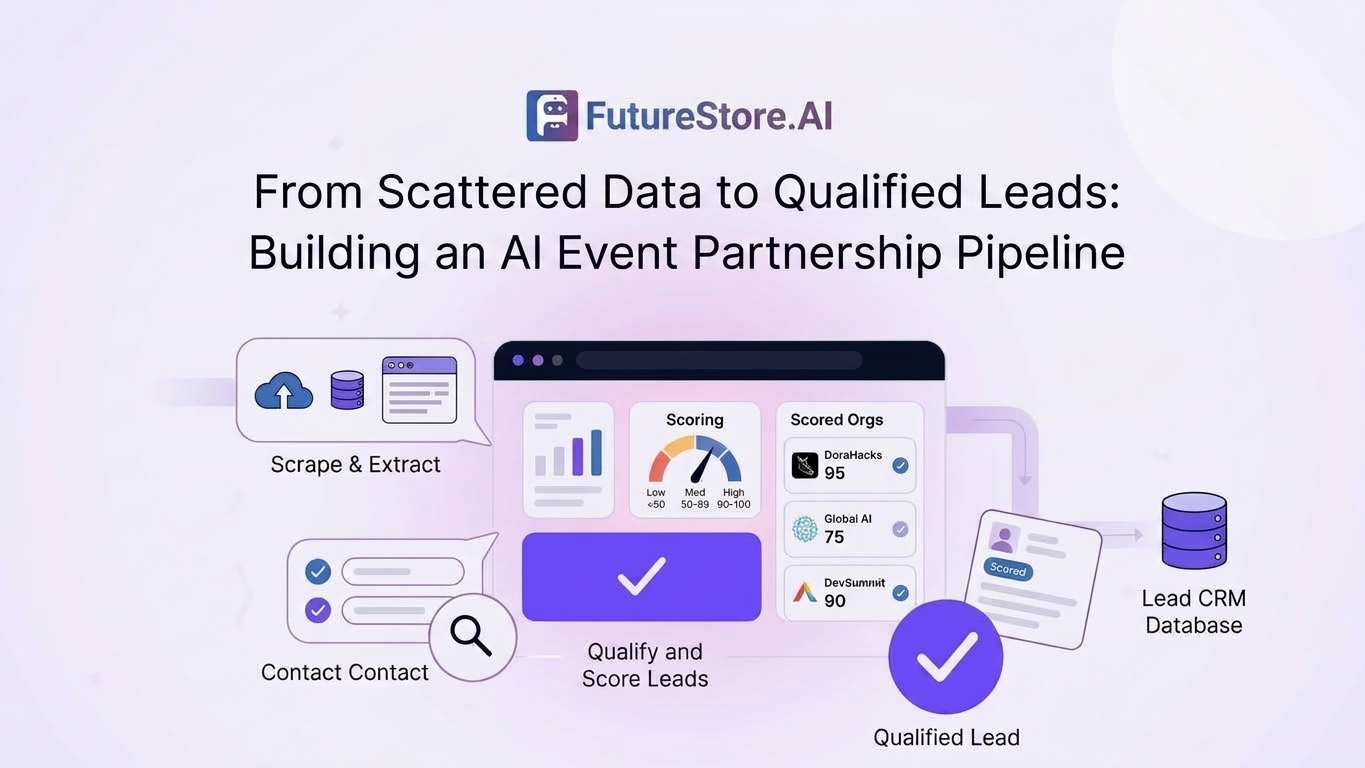
From Scattered Data to Qualified Leads: Building an AI Event Partnership Pipeline
How automated discovery, web scraping, data extraction, qualification, lead scoring, and CSV export turn scattered online information into structured partnership leads.
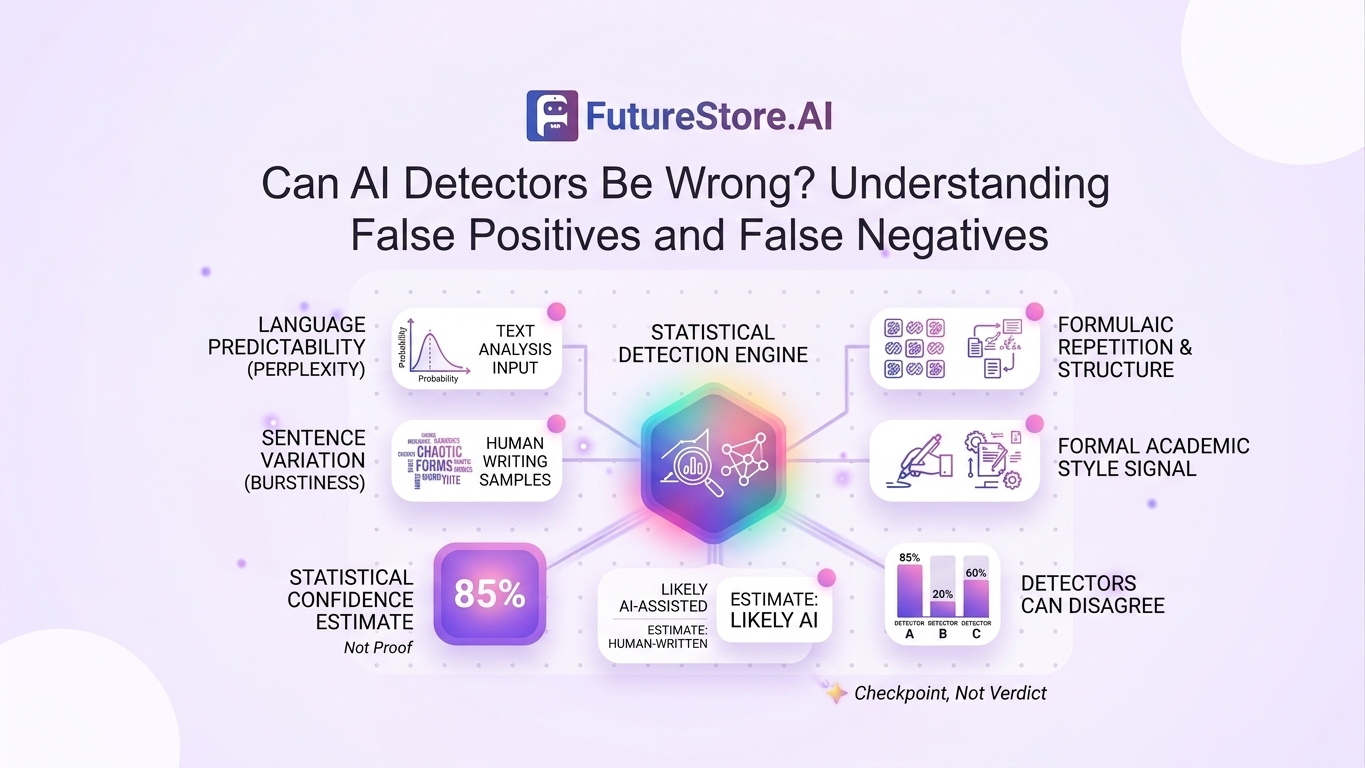
Can AI Detectors Be Wrong? Understanding False Positives and False Negatives
AI detectors can produce both false positives and false negatives. Learn how AI detection works, why results can vary, and why detection scores should be treated as indicators rather than definitive proof of authorship.
.png)
The AI Landscape in 2026: What You Need to Know
Explore the key trends shaping AI in 2026, from rapidly evolving AI models and multimodal systems to AI agents, automation, opensource AI, and the growing role of AI in everyday productivity.