
From Idea to AI Product: How FutureStoreAI’s Five Pillars Work Together
.png)
Learn how FutureStoreAI’s five pillars Learn, Explore, Experiment, Build, and Publish work together to take you from discovering AI to creating and publishing your own AI product.
Why Five Pillars, Not One Big Feature
Most AI platforms pick a single lane. Some act as directories. They help you find a tool, then send you somewhere else to actually use it. Others are pure creation tools. They are powerful, but they assume you already know exactly what you’re looking for. Very few connect the two.
FutureStoreAI is built around five pillars: Learn, Explore, Experiment, Build, and Publish. These are not five separate products bolted together. They are stages of the same journey, and each one feeds the next. Discovery leads to experimentation. Experimentation shapes what gets built. What gets built eventually gets published, and every new published product improves the discovery experience for the next person who arrives with the same question you once had.
Here’s what each pillar actually does, and why the platform is designed this way.
Learn: Starting Without a Technical Background
Most people who would benefit from AI tools are not engineers, and they should not need to be one just to get started.
The Learn pillar exists for exactly that reason. It offers plain-language guides and resources that explain what AI tools actually do, without assuming you already know the vocabulary. As AI models and capabilities shift (and they shift constantly), this content is meant to track those changes rather than going stale the way a lot of “AI 101” content does six months after publishing.
Explore: Making Sense of a Crowded Ecosystem
Once you understand the basics, the next problem is volume. There are thousands of AI tools out there, and a generic search engine was never built to help you compare them.
Explore centers on the AI Tools Directory, a curated and moderated catalog you can filter by category (the type of AI capability, such as image generation or coding), platform (web, API, plugin, mobile), and pricing type. That structure exists specifically to cut down the noise that makes most AI directories exhausting to use.
Explore also includes AI Live, which tracks what is actually happening across the AI world in real time: new launches, trending tools, and ecosystem activity. It is not a static “best AI tools” list that is already outdated by the time you read it.
Experiment: Trying Before Committing
Reading about a tool and actually using it are very different experiences. Two AI tools can both claim to “generate images” and still produce completely different results depending on your specific use case.
This is where AI Lab comes in. It is a hands-on workspace where you can test AI Studio’s tools directly: text-to-image, text-to-audio, image-to-text, audio-to-text, and real-time translation. You can do all of this without leaving the platform, creating separate accounts, or hunting down API keys. Your history and favorites persist across sessions, so nothing you have tried gets lost between visits.
Most directories are link-out only. You discover a tool, then leave to actually test it, and a lot of people simply do not come back. Keeping experimentation on-platform is one of the more meaningful differences between a real ecosystem and a simple list.
Build: Turning an Idea into Something Real
Experimenting is one thing. At some point, you stop testing and start actually making something you intend to keep, or publish.
Build is where AI Studio’s tools shift from something you are trying out to something you are actually using: generating the images, audio, or translated text you need for a real project, not just a test run. Because your history and projects persist across sessions, you can pick up exactly where you left off instead of starting over each time.
Build is also where the Creator side of the platform begins. It is where you gather what you will eventually need to submit to the directory, your product’s name, description, and media, so that by the time you move to Publish, everything is already in place rather than scrambled together at the last minute.
Publish: Closing the Loop
The final pillar is distribution: submitting a product to the directory, going through moderation, and maintaining accurate details so people can actually find it. Every listing gets a stable, structured page designed to perform well in search, and Creators get a real dashboard to track submissions and see how their listing is performing. It is not a black box.
This is also where the loop closes. Every new, moderated listing makes the directory a little better for the next Explorer who shows up looking exactly that kind of tool.
Why the Order Matters
It would be easy to build these as five disconnected features. The reason they are pillars of one ecosystem, not five separate products, is that the value compounds. Someone who starts by just wanting to learn what “text-to-image” even means can, without ever leaving the platform, end up testing five different tools, building something of their own, and eventually publishing it for other people to discover.
Start Wherever You Are
You don’t need to begin at Learn and work your way through in order. Curious what's out there? Start with Explore. Already have an idea you want to test? Jump into Experiment. Ready to publish something you’ve already built elsewhere? Head straight to Build.
Whichever pillar you start at, the rest of the ecosystem is already there once you need it.
Start Exploring - Free. No credit card required.
Recommended for you
.png)
Introducing the New FutureStoreAI Overview: Discover What’s New in Our Latest Video Demo
A quick walkthrough of the latest FutureStoreAI updates, showcasing our searchable tool directory, built-in creation studio, real-time AI market analytics, and new creator feature set.
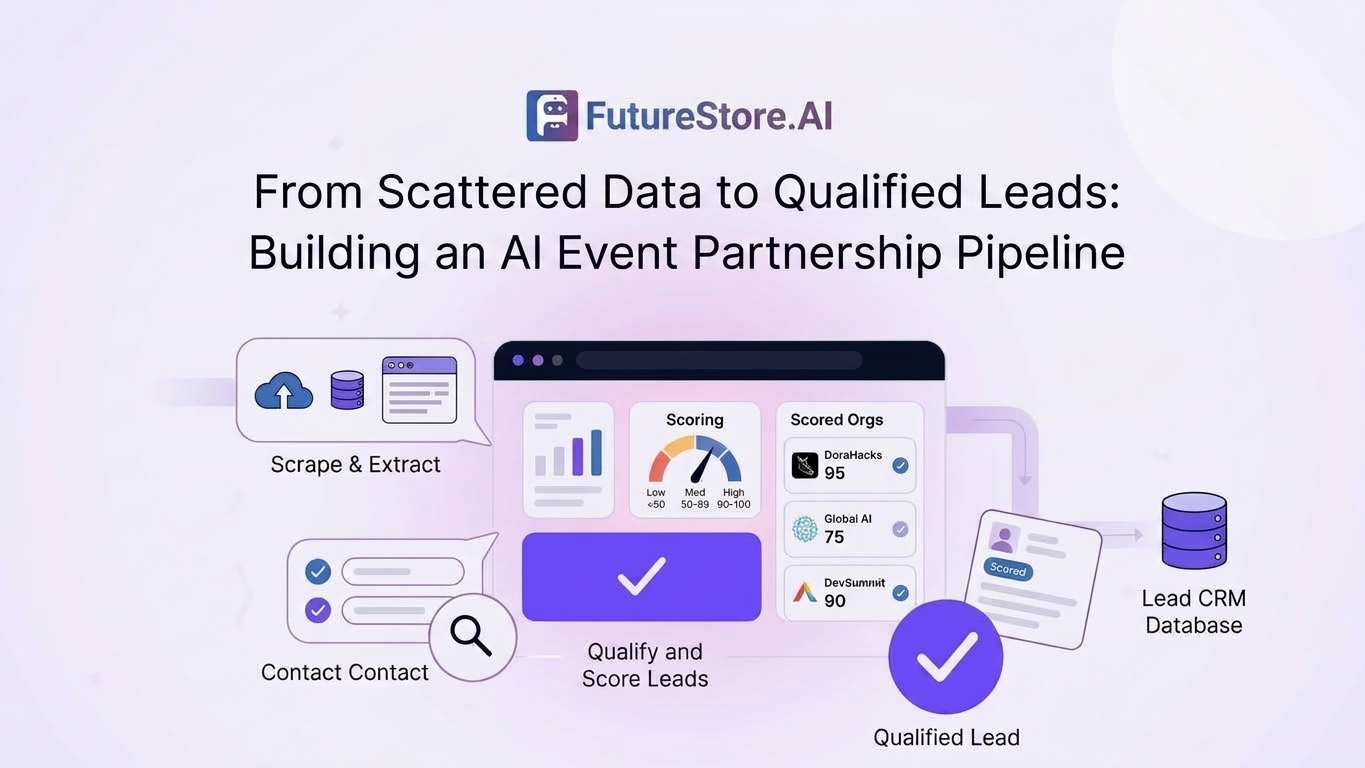
From Scattered Data to Qualified Leads: Building an AI Event Partnership Pipeline
How automated discovery, web scraping, data extraction, qualification, lead scoring, and CSV export turn scattered online information into structured partnership leads.
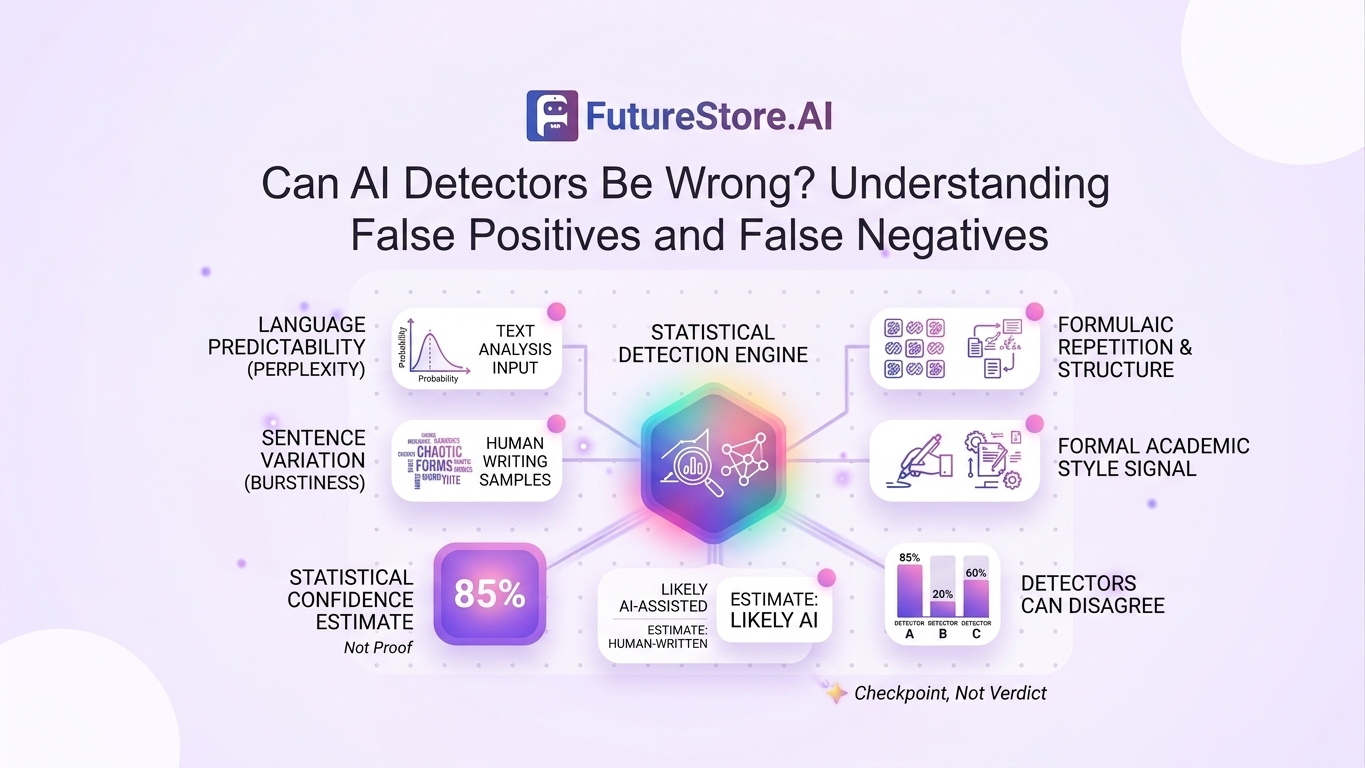
Can AI Detectors Be Wrong? Understanding False Positives and False Negatives
AI detectors can produce both false positives and false negatives. Learn how AI detection works, why results can vary, and why detection scores should be treated as indicators rather than definitive proof of authorship.